

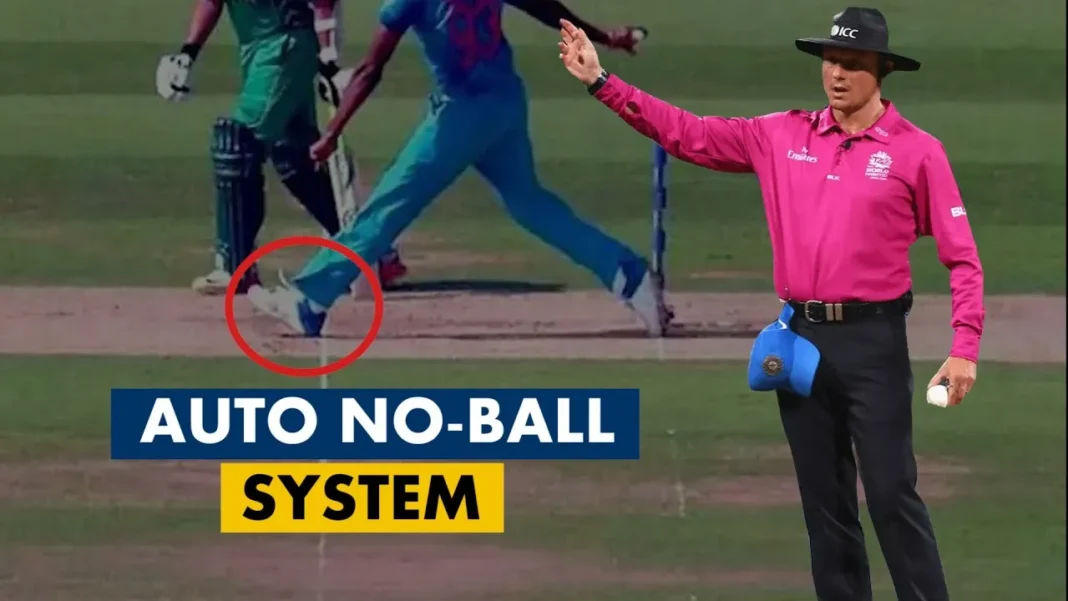
no ball detection technology has fundamentally altered the landscape of modern cricket, ensuring that the razor-thin margin between a legal delivery and a foul is no longer left to the fallible human eye. For decades, the sight of an umpire missing a blatant overstep was a source of immense frustration for players and fans alike. A single missed call could change the trajectory of a World Cup final or a high-stakes franchise match, leading to controversies that lasted long after the final ball was bowled. Now, the integration of high-speed cameras and real-time data processing has moved this responsibility from the field to the third umpire’s booth.
This shift was not just about correcting errors; it was about protecting the integrity of a sport where every millimetre counts. When a bowler like Mark Wood or Mitchell Starc charges in at nearly one hundred miles per hour, the on-field umpire has less than a fraction of a second to look at the front foot and then quickly shift their gaze to the batter’s end. It is a biological limitation that frequently led to errors. The introduction of automated systems has relieved the on-field officials of this secondary burden, allowing them to focus entirely on the action at the striker’s end.
The beauty of the current system lies in its seamless integration into the flow of the game. Most fans watching at home might not even notice the sophisticated machinery working behind the scenes until a siren blares across the stadium. This instant feedback loop is the result of years of technological refinement and a commitment from governing bodies to embrace the digital age. By removing the guesswork, the sport has become fairer, more transparent, and significantly more professional.
We often remember the “howlers” of the past, where a wicket was taken off a ball that should have been called illegal. Those moments used to leave a bitter taste in the mouth of the batting side, often feeling as though they were cheated by a lack of oversight. Today, no ball detection technology acts as a silent guardian, ensuring that if a bowler pushes their luck too far with the crease, the consequences are immediate. This has forced bowlers to be more disciplined and has given batters the confidence that they are playing on a level field.
How No Ball Detection Technology Protects the Game’s Integrity
The mechanics behind the current officiating standards are a marvel of modern sports engineering. Typically, the system utilizes dedicated side-on cameras that are calibrated specifically to the popping crease at both ends of the pitch. These cameras capture footage at a significantly higher frame rate than standard broadcast cameras. This allows the third umpire to see the exact moment the foot lands, distinguishing between a heel that is behind the line and one that is slightly over it with microscopic precision.
In the past, the third umpire only checked for a no-ball after a wicket had fallen. This “reactive” approach was often criticized because it meant that many illegal deliveries went unpunished during the course of an over. If a bowler overstepped five times but didn’t take a wicket, the batting side missed out on five extra runs and five extra balls. The move to a “proactive” monitoring system means that every single delivery is checked in real-time, providing a much more accurate reflection of the contest.
This proactive approach has also introduced the concept of the “instant no-ball siren.” The moment the technology identifies an overstep, a signal is sent to the on-field umpire who then signals the illegal delivery. This allows the batter to capitalize on the “free hit” that usually follows in limited-overs formats. It has added a layer of tactical excitement to the game, as batters often take massive risks on free hits, knowing they cannot be dismissed by most conventional means.
From an EEAT perspective, the reliability of no ball detection technology is backed by rigorous testing from organizations like the International Cricket Council. Before any system is approved for use in international cricket, it must pass strict accuracy benchmarks. This ensures that the data provided to the umpires is trustworthy and authoritative. Fans and players can rest easy knowing that the decisions are based on verifiable evidence rather than subjective opinion or a lucky guess from a distant official.
The Technical Evolution and Implementation Challenges
Implementing this technology across different venues and formats has not been without its challenges. Every cricket ground is unique, with different lighting conditions and camera angles. Curators and technicians must work together to ensure that the cameras are perfectly aligned with the crease. Even a slight tilt in the camera angle could lead to a parallax error, where a legal foot looks like it is overstepping. Calibration is therefore a critical part of the pre-match ritual for the officiating team.
High-speed data processing is the backbone of this operation. The footage from the crease cameras must be transmitted to the third umpire’s screen with virtually zero latency. If there is a delay in the video feed, the call might come too late, disrupting the rhythm of the game. The evolution of fiber-optic networks and edge computing has made this instant feedback possible, even in stadiums located in remote areas. It is a testament to how far telecommunications have come in supporting global sport.
While front-foot no-balls are the most common focus, the technology is also being adapted to monitor “waist-high” full tosses. These are often much harder to judge because the height of the ball must be measured relative to the batter’s waist in an upright position. Some advanced systems now use ball-tracking data to calculate the height of the ball as it passes the batter, providing an objective measurement. This removes the heated debates between batters and umpires regarding whether a ball was dangerously high.
The global implementation of no ball detection technology has also highlighted the financial divide in world cricket. While wealthy boards like the BCCI or CA can afford the most expensive systems for their domestic leagues, smaller nations often struggle to find the budget for such high-tech officiating. This has led to calls for a more standardized, cost-effective version of the technology that can be used in Associate nations, ensuring that the quality of officiating is consistent regardless of where the match is played.
The Psychological Shift for Modern Bowlers
The presence of constant monitoring has fundamentally changed the mindset of bowlers. In the era of human officiating, many bowlers would “push the line,” knowing they could get away with an extra inch here and there. They relied on the umpire’s focus being split between the feet and the hands. Today’s bowlers know that there is no hiding. If they overstep by even a millimeter, a siren will go off, and they will be penalized with an extra run and a free hit.
This has led to a much greater emphasis on “crease management” during practice sessions. Fast bowlers now spend hours working on their run-ups to ensure their foot lands safely behind the line. Coaches use wearable sensors and high-speed video during training to help bowlers identify why they might be overstepping. Sometimes it is a matter of rhythm, and other times it is a result of fatigue as the match wears on. The technology has essentially turned a simple act into a highly analyzed discipline.
The pressure of the “free hit” is perhaps the most significant psychological burden. A bowler who oversteps in a T20 match knows they have given the batter a “get out of jail free” card. The next ball will likely be launched into the stands, and the momentum of the over will be lost. This has made the modern bowler much more cautious, often choosing to land their foot well behind the line to avoid any risk. This small adjustment can sometimes cost them a bit of pace, showing how the tech indirectly influences the physics of the game.
Interestingly, we are seeing fewer no-balls in the modern game compared to twenty years ago. This is not because bowlers have suddenly become more talented, but because the cost of an illegal delivery is now so high. The [no ball detection technology] has acted as a deterrent, forcing a higher level of professionalism across the board. It is a classic example of how technology can improve the standards of an industry by providing clear, undeniable boundaries for behavior and performance.
Enhancing the Spectator Experience Through Transparency
One of the secondary benefits of this technology is the way it has improved the viewing experience for fans. When the third umpire checks a no-ball on the big screen, the crowd is taken along for the ride. We see the zoomed-in footage, we see the line, and we see the foot. This transparency builds trust between the fans and the officials. Even if a supporter is unhappy that their team’s wicket was overturned, they cannot argue with the visual evidence provided by the high-speed cameras.
Broadcasters have also capitalized on this by creating dedicated segments around officiating. They use the footage to explain the rules and to show how close the bowlers are to the line. This educational aspect helps fans appreciate the skill involved in bowling at high speeds while maintaining perfect footwork. It turns a potential point of contention into a moment of technical analysis that adds depth to the overall broadcast. The drama of the “no-ball check” has become a recognizable trope in modern cricket.
Furthermore, the integration of AI is the next frontier for no ball detection technology. Future systems may not even require a human to watch the screen. AI algorithms can be trained to recognize the “landing event” and the “crease line,” triggering the siren automatically within milliseconds of the landing. This would further reduce the time taken for calls and ensure that the on-field umpire can be notified before the ball even reaches the batter. This level of automation is the ultimate goal for a sport that is constantly looking to speed up its play.
The sense of “fair play” that this technology fosters cannot be overstated. Cricket has always been known as the “gentleman’s game,” and while the competitive intensity has increased, the desire for fairness remains. When technology ensures that every run is earned and every wicket is legal, it upholds the values that have made the sport a global favorite for centuries. It bridges the gap between the traditionalists who love the history of the game and the modernists who demand modern solutions for modern problems.
The Role of Data in Coaching and Performance Analysis
Beyond the immediate match-day decisions, the data generated by these systems is a goldmine for coaches and analysts. Every overstep is recorded, allowing teams to identify trends in a bowler’s performance. For example, a coach might notice that a particular bowler only starts overstepping after their fifth over, indicating a drop in fitness or concentration. This allows for much more targeted interventions during training, focusing on the root cause of the problem rather than just the symptom.
Bowlers can also use the footage to study their own mechanics. They can see how their body alignment changes when they try to bowl faster and how that affects their foot placement. This feedback loop is essential for the development of young players who are still finding their rhythm. By having access to international-standard [no ball detection technology] in their home academies, the next generation of cricketers will be better prepared for the rigors of the professional circuit.
The data also helps in injury prevention. Overstepping is often a sign of a “stuttering” run-up or an inconsistent stride length, both of which can lead to increased stress on the back and knees. By correcting these issues early, coaches can prolong the careers of their fast bowlers. The technology is therefore not just a tool for the umpires, but a vital component of the modern high-performance ecosystem. It serves the players’ long-term health as much as it serves the match’s short-term fairness.
In the future, we might see this data being used in fantasy sports and betting markets. Fans could bet on how many no-balls will be bowled in a match, or which bowler will have the most disciplined crease management. While this is a more commercial application, it shows how deeply the technology has permeated every aspect of the cricketing world. The more data we have, the more ways we find to engage with the sport we love.
Global Standards and the Path Forward
As we look to the future, the goal is to make these systems universal. Currently, there is still some variation in the technology used across different leagues. Some use more cameras than others, and some have slightly different communication protocols. The ICC is working toward a more unified approach, ensuring that a no-ball in London is judged the same way as a no-ball in Mumbai. This consistency is vital for the credibility of international rankings and world tournaments.
There is also the potential for the technology to assist in other areas of the game, such as monitoring “short runs” or identifying when a fielder’s foot touches the boundary rope. The infrastructure provided by the crease cameras could be expanded to cover the entire field, creating a “smart stadium” environment where every movement is tracked. While this might sound like overkill to some, the trend in modern sports is clearly moving toward more data and more oversight to ensure the highest possible standards of competition.
The human element of umpiring will always be important. We need the officials to manage the players, handle the match conditions, and make the big calls that technology can’t—like judging intent or managing sledging. However, by delegating the black-and-white calls like no-balls to machines, we allow the humans to do what they do best. It is a partnership between man and machine that has made cricket one of the most technologically advanced sports in the world.
The journey of [no ball detection technology] is a success story of innovation. It began as a controversial experiment and has evolved into a non-negotiable part of the game. It has survived the skepticism of the old guard and the technical glitches of the early years to become a symbol of the sport’s commitment to excellence. As the technology continues to get faster and more accurate, the “no-ball” will eventually become a relic of the past—a mistake that is caught every single time, ensuring that the game is always played by the rules.
In every match, there is a moment where the siren goes off and the game shifts. The batter looks up, the bowler sighs, and the crowd roars. This sequence is now a part of the sport’s DNA, a modern ritual enabled by the invisible work of cameras and computers. It reminds us that while cricket is a game of heart and hustle, it is also a game of inches. And thanks to modern technology, those inches are now being measured with the respect they deserve.
Read also :-
madhya pradesh cricket team vs kerala cricket team match scorecard
bengal cricket team vs chandigarh cricket team match scorecard
delhi cricket team vs saurashtra cricket team match scorecard
pakistan national cricket team vs new zealand national cricket team match scorecard
australian men’s cricket team vs pakistan national cricket team match scorecard