

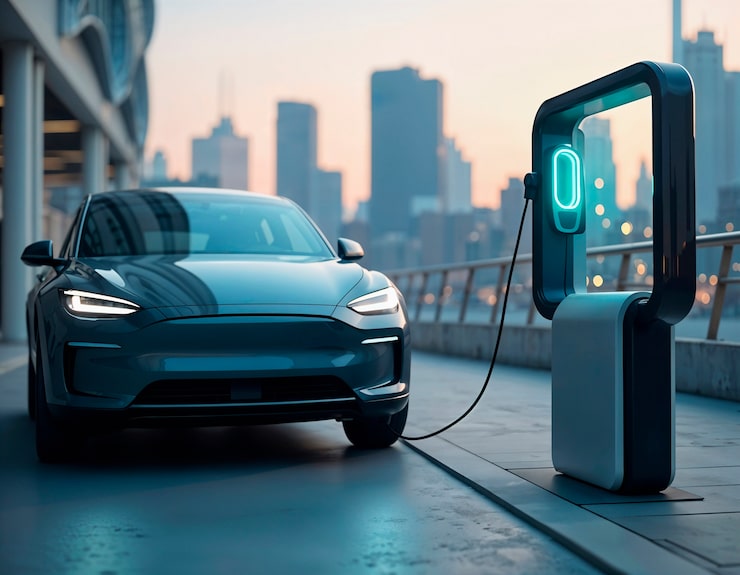
Electric vehicles technology is rewriting the story of global transportation. From futuristic dreams to a rapidly growing reality, EVs are no longer limited to concept models or luxury experiments. They have entered mainstream markets, reshaping the way people move, commute, and even think about cars.
Unlike traditional fuel-powered engines, electric vehicles technology focuses on efficiency, sustainability, and innovation. It connects environmental responsibility with the excitement of cutting-edge engineering. For many, choosing an EV is not just about buying a car—it’s about making a statement for the planet and the future.
The Rise of Electric Vehicles Technology in Modern Times
The journey of electric vehicles technology didn’t begin recently. In fact, the earliest versions of electric cars were developed in the 19th century. However, they were overshadowed by gasoline-powered engines that offered longer range and easier refueling.
Fast forward to the 21st century, and rising fuel costs, climate change, and rapid advances in battery design brought electric vehicles back into the spotlight. Today, companies like Tesla, BYD, Tata Motors, and Hyundai are investing heavily in electric vehicles technology to meet the demands of a fast-changing world.
Government policies, subsidies, and global emission targets have also played a vital role. For instance, Norway leads the world in EV adoption, where more than half of new cars sold are electric. Similar trends are now visible in the United States, Europe, China, and India.
Core Components Driving Electric Vehicles Technology
Understanding electric vehicles technology requires looking at the heart of what makes them work. Unlike traditional vehicles, the primary focus is on batteries, motors, and charging systems.
The battery is the soul of the vehicle, storing energy and delivering it to the motor. Lithium-ion batteries dominate the industry today because of their high energy density and long cycle life. Researchers are now working on solid-state batteries, which promise even faster charging and longer ranges.
Motors, powered by electricity instead of fuel, provide smooth acceleration and efficient energy use. Combined with regenerative braking, electric vehicles technology allows energy recovery that traditional cars cannot achieve.
Finally, charging infrastructure plays a huge role in adoption. With fast-charging stations being developed across highways and cities, range anxiety is slowly becoming a concern of the past.
Electric Vehicles Technology and Sustainability
At its core, electric vehicles technology is about sustainability. With rising global warming concerns, reducing carbon emissions is no longer optional. EVs offer an immediate solution by eliminating tailpipe emissions and lowering dependency on fossil fuels.
However, the true impact of electric vehicles technology depends on how the electricity powering them is generated. Countries relying on renewable energy sources like solar, wind, and hydro maximize the benefits of EVs. On the other hand, regions heavily dependent on coal still face challenges in ensuring a completely green transition.
Despite these hurdles, studies show that EVs have a significantly lower lifetime carbon footprint than internal combustion engine vehicles. This makes them a key part of long-term climate solutions.
Electric Vehicles Technology in Everyday Life
Beyond sustainability, electric vehicles technology is transforming user experiences. Imagine driving a car that makes little to no noise, accelerates instantly, and requires minimal maintenance. That is the charm of EVs.
Owners also enjoy lower running costs since charging is cheaper than refueling with petrol or diesel. Over time, savings in fuel and maintenance make electric vehicles more cost-efficient despite their higher initial price.
Stories from EV owners reflect this transition. A family in Bangalore switched to an electric car and reduced their monthly fuel bills by 70%. Meanwhile, young professionals in California prefer EVs for their smart features, seamless connectivity, and eco-friendly appeal.
Challenges Facing Electric Vehicles Technology
Despite its promise, electric vehicles technology faces hurdles that cannot be ignored. The higher upfront cost remains a barrier for many buyers. While battery prices are decreasing, affordability is still a concern in developing markets.
Another challenge is the charging network. Urban areas may have enough stations, but rural and semi-urban locations lag behind. Governments and private companies are racing to solve this issue by investing in widespread charging solutions.
Battery recycling is another pressing concern. With millions of lithium-ion batteries expected to retire in the coming decades, creating sustainable recycling processes is critical to avoid new environmental issues.
Future Innovations in Electric Vehicles Technology
The future of electric vehicles technology looks bright and revolutionary. Researchers are pushing the limits of battery technology, with solid-state batteries, graphene-based solutions, and ultra-fast charging systems showing immense potential.
Wireless charging is also gaining traction, where cars can recharge by simply parking over a special pad. Coupled with advancements in artificial intelligence and autonomous driving, the future EV will not just be a car—it will be a smart, connected mobility solution.
Even heavy industries like trucking and aviation are experimenting with electric vehicles technology. Electric buses are already running in cities worldwide, and electric planes are in development for short-distance travel.
Global Impact of Electric Vehicles Technology
The global impact of electric vehicles technology is evident across multiple dimensions. Economically, it is creating new markets, industries, and jobs in clean energy and manufacturing. Politically, it reduces dependence on oil imports, giving nations more control over energy security.
Socially, it is changing consumer mindsets. Owning an EV is not just about personal convenience but about being part of a larger movement for change. Communities that adopt electric vehicles inspire others, creating a ripple effect that accelerates global adoption.
In cultural terms, electric vehicles technology has also become aspirational. From Hollywood celebrities flaunting their Teslas to Indian startups designing budget-friendly EVs, the shift is no longer limited to elites—it’s becoming mainstream.
Electric Vehicles Technology and the Road Ahead
Looking ahead, the pace of innovation ensures that electric vehicles will dominate global transportation sooner than expected. With falling battery costs, better infrastructure, and supportive government policies, barriers will continue to shrink.
The journey of electric vehicles technology mirrors the evolution of mobile phones. What was once seen as expensive, impractical, and niche quickly became affordable and essential. Similarly, EVs are on their way to becoming the standard choice for millions.
Ultimately, electric vehicles technology is more than a trend—it is a revolution. It represents human ingenuity, environmental responsibility, and the pursuit of progress. For individuals and societies alike, embracing this technology means embracing a cleaner, smarter, and more sustainable future.
Read also:
lakers vs golden state warriors match player stats
golden state warriors vs houston rockets match player stats
golden state warriors vs sacramento kings match player stats
philadelphia eagles vs green bay packers match player stats