

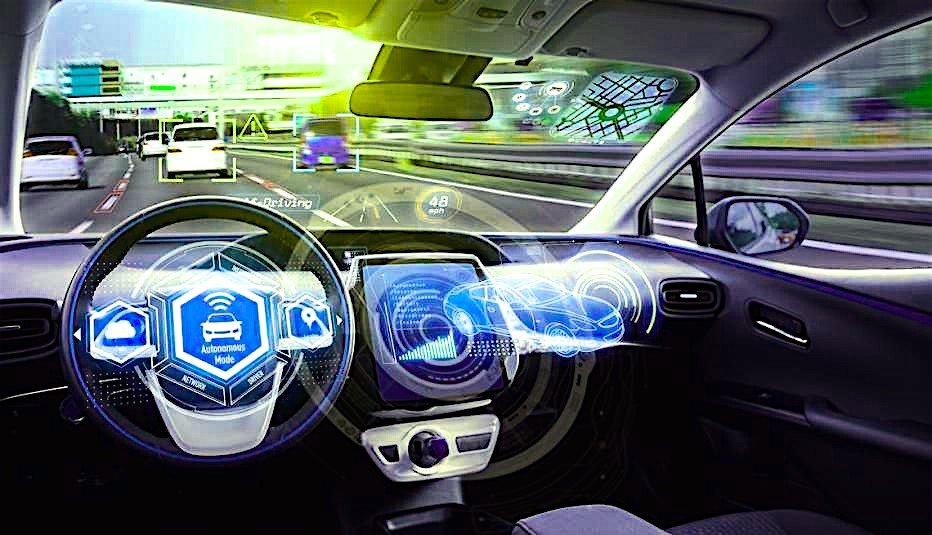
Self-driving cars are no longer a concept of science fiction; they are rapidly becoming a reality in modern transportation. These vehicles, equipped with advanced sensors, AI algorithms, and machine learning capabilities, promise to revolutionize the way people commute, enhancing safety, efficiency, and convenience.
Over the past decade, self-driving technology has progressed from experimental prototypes to fully functional autonomous vehicles capable of navigating complex urban environments. Companies around the world are investing billions to develop vehicles that can operate with minimal or no human intervention.
Understanding Self-driving Cars
Self-driving cars are vehicles that use artificial intelligence, computer vision, and a variety of sensors to perceive their surroundings and make driving decisions without human input. The primary goal of these cars is to reduce traffic accidents, improve traffic flow, and provide accessible transportation for everyone.
Autonomous cars operate at different levels of automation, defined by the SAE International standard:
-
Level 1: Driver assistance (e.g., adaptive cruise control)
-
Level 2: Partial automation (e.g., lane-keeping plus adaptive cruise)
-
Level 3: Conditional automation (driver intervention required in specific situations)
-
Level 4: High automation (vehicle can operate autonomously in most environments)
-
Level 5: Full automation (no human intervention needed under any conditions)
Currently, most commercial self-driving cars are at Level 3 or Level 4, with research progressing toward fully autonomous Level 5 vehicles.
Pioneers in Self-driving Car Technology
Several companies and innovators have been at the forefront of developing self-driving cars, contributing to the rapid advancements in this field:
1. Tesla – Known for its Autopilot and Full Self-Driving (FSD) technology, Tesla has been a pioneer in bringing semi-autonomous driving features to the mass market.
2. Waymo – A subsidiary of Alphabet Inc., Waymo has developed fully autonomous vehicles that operate in designated areas with minimal human supervision.
3. Uber ATG – Uber Advanced Technologies Group focused on self-driving taxis and delivery vehicles, pioneering autonomous ride-sharing concepts.
4. Cruise – Backed by General Motors, Cruise develops autonomous vehicles for urban environments, emphasizing safety and reliability.
5. Apple – Rumored to be developing a fully autonomous vehicle, Apple’s secretive “Project Titan” is speculated to combine advanced AI and machine learning for future self-driving solutions.
6. Baidu – China’s leading AI and tech company, Baidu has made significant progress in self-driving technology with its Apollo platform.
7. Nuro – Focused on autonomous delivery vehicles, Nuro is transforming logistics and last-mile transportation.
8. Aurora – Founded by former executives from Tesla, Google, and Uber, Aurora aims to deliver self-driving technology for freight and passenger transport.
9. Zoox – Acquired by Amazon, Zoox is developing bi-directional autonomous vehicles designed for ride-hailing.
10. Pony.ai – A Chinese-American startup focusing on autonomous mobility solutions, Pony.ai is testing Level 4 vehicles in multiple cities.
How Self-driving Cars Work
The operation of self-driving cars relies on a combination of technologies working in harmony:
-
Sensors and Cameras: LIDAR, radar, and ultrasonic sensors detect obstacles, vehicles, and pedestrians.
-
AI Algorithms: Analyze real-time data to make driving decisions.
-
High-definition Maps: Provide detailed information about roads, traffic patterns, and navigation routes.
-
Connectivity: Communication with other vehicles (V2V) and infrastructure (V2I) improves safety and traffic flow.
These systems continuously monitor the vehicle’s environment and adjust speed, direction, and braking to navigate safely. Advanced AI allows self-driving cars to handle complex situations such as merging into traffic, avoiding collisions, and recognizing traffic signals.
Advantages of Self-driving Cars
The adoption of self-driving cars offers numerous benefits:
-
Improved Safety: Reduces accidents caused by human error, including distractions and fatigue.
-
Traffic Efficiency: Optimized driving algorithms reduce congestion and improve fuel efficiency.
-
Accessibility: Provides mobility solutions for the elderly and disabled who cannot drive.
-
Environmental Impact: Autonomous vehicles can be integrated with electric car technology, reducing emissions.
-
Convenience: Passengers can engage in other activities while commuting.
Challenges and Concerns
Despite the potential, self-driving cars face several challenges:
-
Technical Limitations: Navigating unpredictable environments like bad weather or construction zones.
-
Legal and Regulatory Issues: Laws and liability in case of accidents remain complex.
-
Ethical Dilemmas: Decision-making in unavoidable accident scenarios.
-
Cybersecurity Risks: Vulnerability to hacking and system failures.
-
Public Acceptance: Convincing society to trust fully autonomous vehicles.
Self-driving Cars in Everyday Life
Cities like Phoenix, San Francisco, and Shanghai are already seeing autonomous vehicles in ride-hailing services, delivery, and pilot programs. Companies are experimenting with self-driving taxis, autonomous buses, and robotic delivery services, integrating self-driving cars into daily life.
For example, Waymo’s autonomous ride-hailing services in Phoenix provide hundreds of rides daily, showing the practical utility and public readiness for semi-autonomous transportation solutions.
The Future of Self-driving Cars
The future of self-driving cars is promising. Experts predict that within the next decade, autonomous vehicles will dominate urban transport, complementing traditional vehicles and public transport. Integration with AI-powered smart cities will optimize traffic patterns, reduce pollution, and create safer roads.
In addition, self-driving technology will transform logistics and e-commerce. Autonomous delivery vehicles can operate 24/7, improving efficiency and reducing costs for businesses while meeting consumer demands faster.
Social and Economic Impacts
The widespread adoption of self-driving cars will impact society and the economy in various ways:
-
Job Transformation: Driving jobs may decline, while tech-related roles will increase.
-
Urban Planning: Cities can be redesigned with fewer parking spaces and optimized traffic management.
-
Insurance Industry: Shift from individual liability to product liability for manufacturers.
-
Mobility for All: Expanding access to affordable transportation for non-drivers.
The combination of economic efficiency, environmental sustainability, and increased safety makes autonomous vehicles a transformative technology for the 21st century.
Read also:
instagram story viewers
dumpor
facebook vip bio
snapchat bio